

Springtime in Asheville
Enjoy and support the renewal of Western North Carolina’s largest city

Spring is an especially rejuvenating time to visit Asheville in beautiful Western North Carolina, and this year is no exception. Waterfalls are full from winter rains, flowers are bursting into bloom, and the economy is starting to rebound post-Hurricane Helene.
I visited the city over Spring Equinox, and as a former resident who moved out post-hurricane, experiencing Asheville this season felt cathartic and inspiring. While the storm’s destruction was significant and some of it long-lasting or permanent, it’s also true that most of the city’s infrastructure is in-tact, some businesses have expanded, and other establishments have opened anew.
Seeing most of the town ready for business-as-usual was a relief, especially since many people’s livelihoods depend on it. Tourism plays a major role in Asheville’s economy, and the city needs visitor dollars to keep it thriving, particularly the small businesses, artisans, and hospitality workers.
So instead of writing Asheville off or delaying a trip, I encourage you to hop in the car or on a plane and visit. Here are some of my favorite places to enjoy and support:
Soak In Nature and Art
Located in the heart of the Blue Ridge Mountains, beautiful hikes surround Asheville in all directions, including many featuring waterfalls. Here is a handy guide, including wheelchair-accessible paths. Catawba Falls Trail near Black Mountain is a favorite local outing just a short drive east.
If botanical gardens are your thing, check out the Asheville Botanical Garden north of downtown, a lovely natural respite for a short walk, or the larger North Carolina Botanical Garden just south of town.
If you’d like to soak up local art in the city, walking all over downtown is a great way to enjoy creative venues, including the Asheville Art Museum, Center for Craft, Moogseum, Asheville Pinball Museum, the murals and tiny doors (and some say ghost) of Chicken Alley, a host of galleries, and historic architecture. Here’s a downtown arts map.
Rest Easy
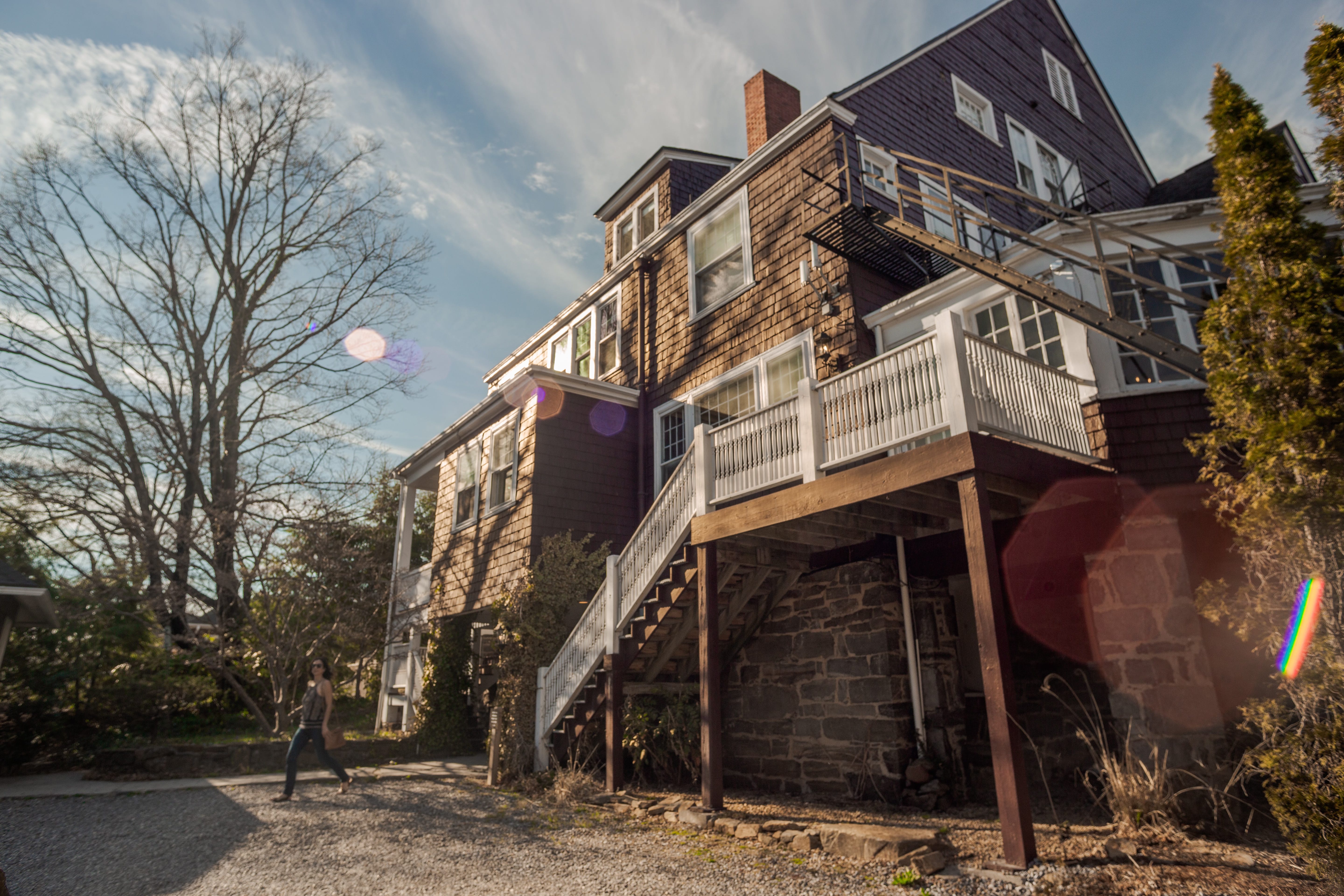
In terms of where to lay your head, Asheville is home to many lovely bed-and-breakfasts and hotels in walkable neighborhoods near cafés and other amenities. One establishment rises above the rest in the eyes of Michelin, however, and that’s Blind Tiger, a boutique inn by Lark Hotels recognized with a coveted Michelin Key.
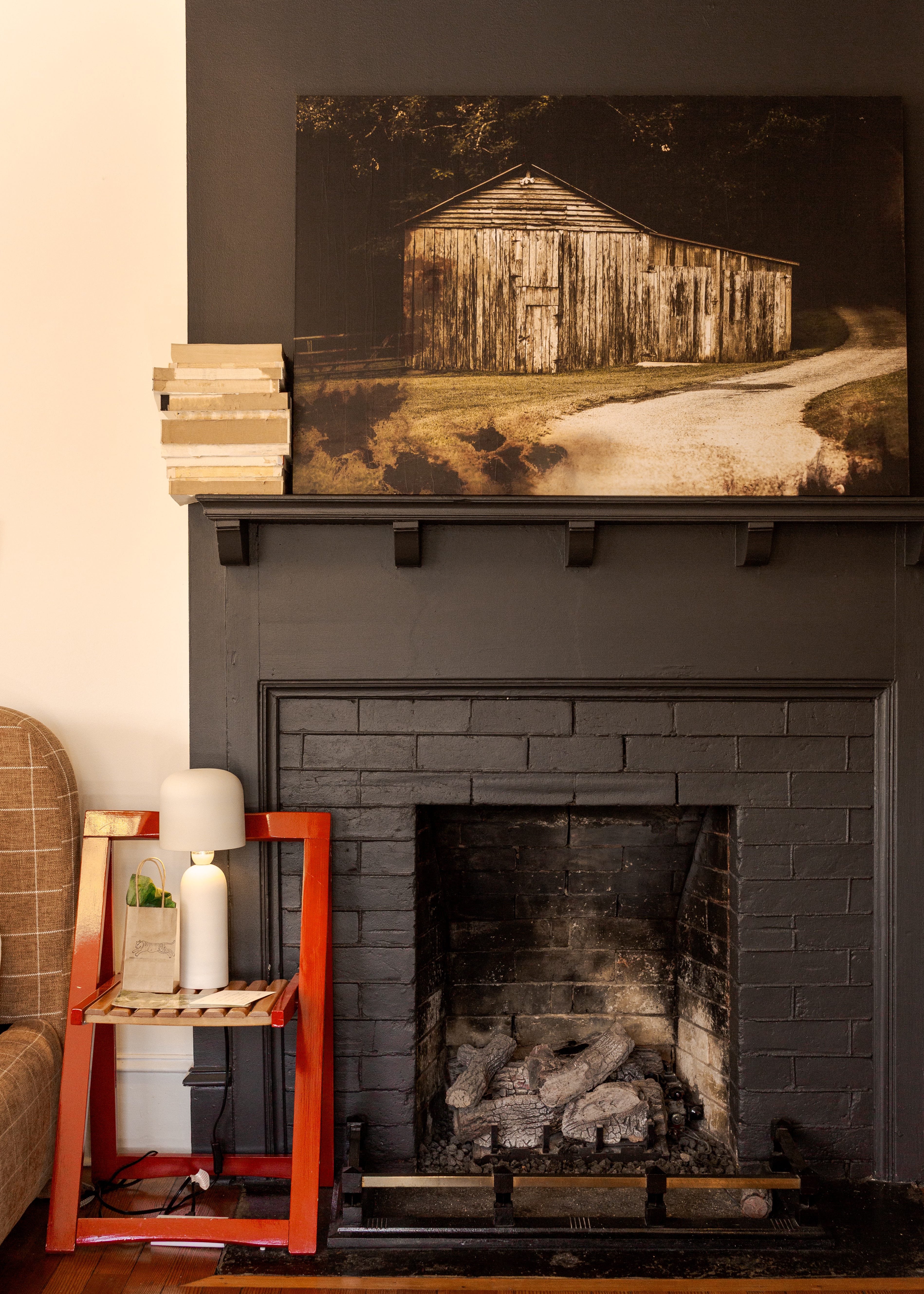
The 14-room property, located in a restored 1889 house in the Chestnut Hill neighborhood, is both stunning and cozy. Every guest room has its own unique decor, and I chose to stay in the Wedge room because I was drawn to its colors – earth tones with accents of brighter hues. In addition to the comfy king bed, wonderful rainfall shower, and luxurious bath linens and toiletries, the sitting area and fireplace was so atmospheric that I started each morning fireside, coffee in hand.
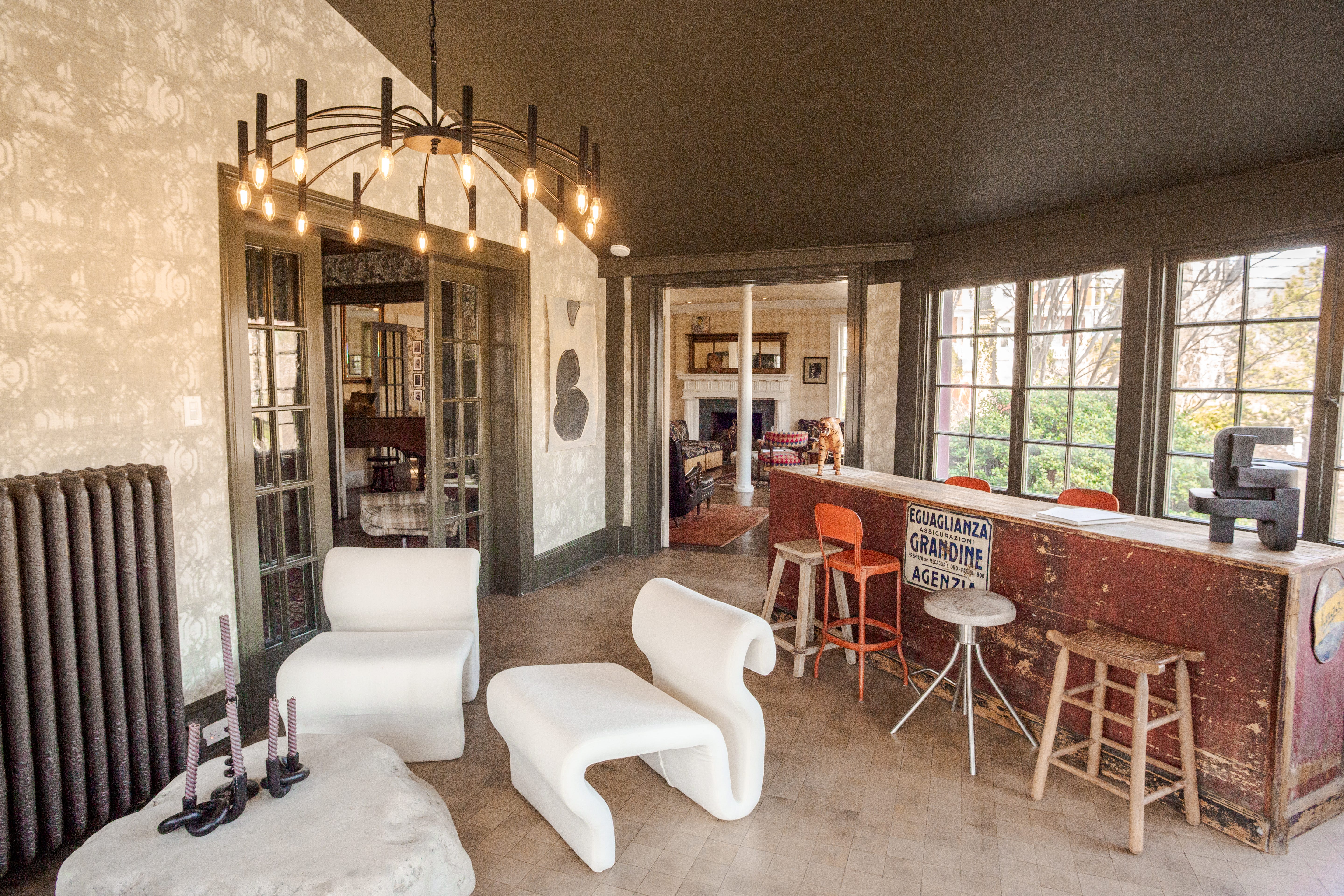
The inn’s common areas are equally impressive. Composed of four spacious connected rooms, each with their own design, I entered the inn through the sunroom – a bright space with large warehouse windows and white furniture where sunlight pours in and radiates.
In contrast, the adjacent kitchen features a moody dark grey palette and wooden café tables, evoking the warmth and elegance of a London café. The antique breakfast bar is stocked with complimentary coffee and teas, gourmet nonalcoholic drinks, and oatmeals, yogurts, and fresh fruits for breakfast. A large glass vintage case houses a variety of snacks and treats, from GMO-free sweet potato chips to gourmet chocolates and candies, alongside toiletry kits, disposable razors, and other amenities. A second antique case houses curated board games and books for borrowing. It’s a fun and gracious room.
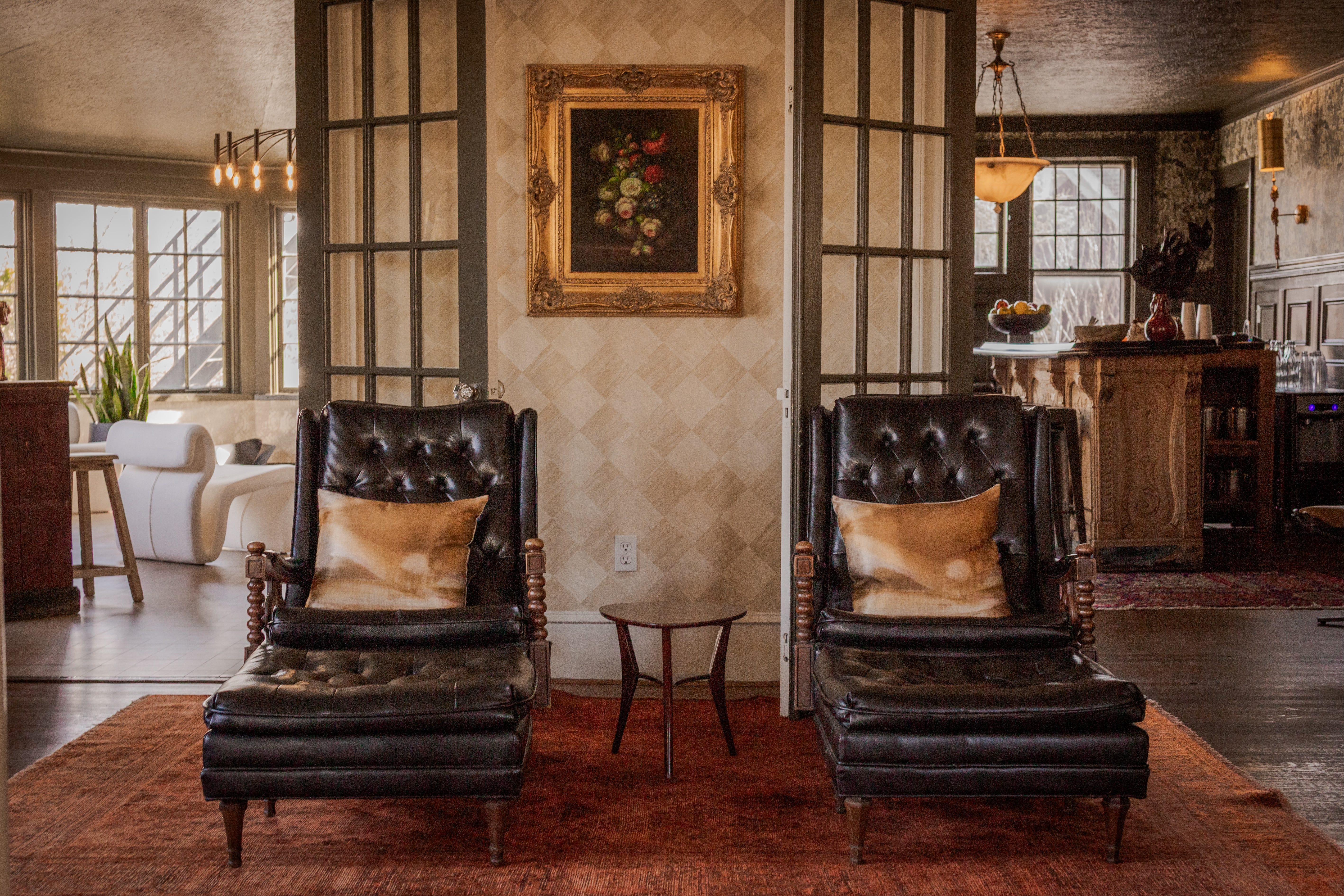
Walking into the large living room, my eye was immediately drawn to the beautiful aqua tile fireplace anchoring the space. Comfortable and colorful low couches and armchairs surround it, punctuated by low tables with art and design books. A rustic two-person chess table sits window-side, a grand piano graces another corner, and a formal dining table with visually striking chairs completes the room. The space strikes a balance between comfort, alluring design, and elegance, and it's where most guests naturally choose to relax.
The second living room is equally enticing, and it, too, has a beautiful fireplace as its focal point, as well as two facing u-shaped couches. I was repeatedly drawn to the back wall showcasing an intriguing collection of 20 framed photos of 1960’s metal and wooden sculptures. A large colorful painting happily dominates the antique staircase up to the guest rooms, and a midcentury couch and reading lamp turns the landing into a lovely sitting area.
The event planner in me immediately noticed how the inn’s naturally-flowing layout and impeccable yet understated design creates an ideal place to host social functions. Casual wedding gatherings, professional mixers, family reunions, and baby showers would all be good reasons to rent out the inn. It turns out I’m far from alone in this sentiment, as the Blind Tiger is regularly booked for these and other celebrations.
Additional Blind Tiger photographs by Zach Suggs Photography can be viewed here.
Eat Well
The only drawback about the Blind Tiger is that it made me never want to leave. But leave I did, because one has to eat more than high-end snacks and breakfast foods. While it was tempting to walk down the block to Owl Bakery or Bone and Broth, or return to my old spots of Cúrate, Chai Pani, or Bull and Beggar, on this trip, I wanted to try new-to-me places. Top of my list were Leo’s House of Thirst and Neng Jr.’s, both in West Asheville.
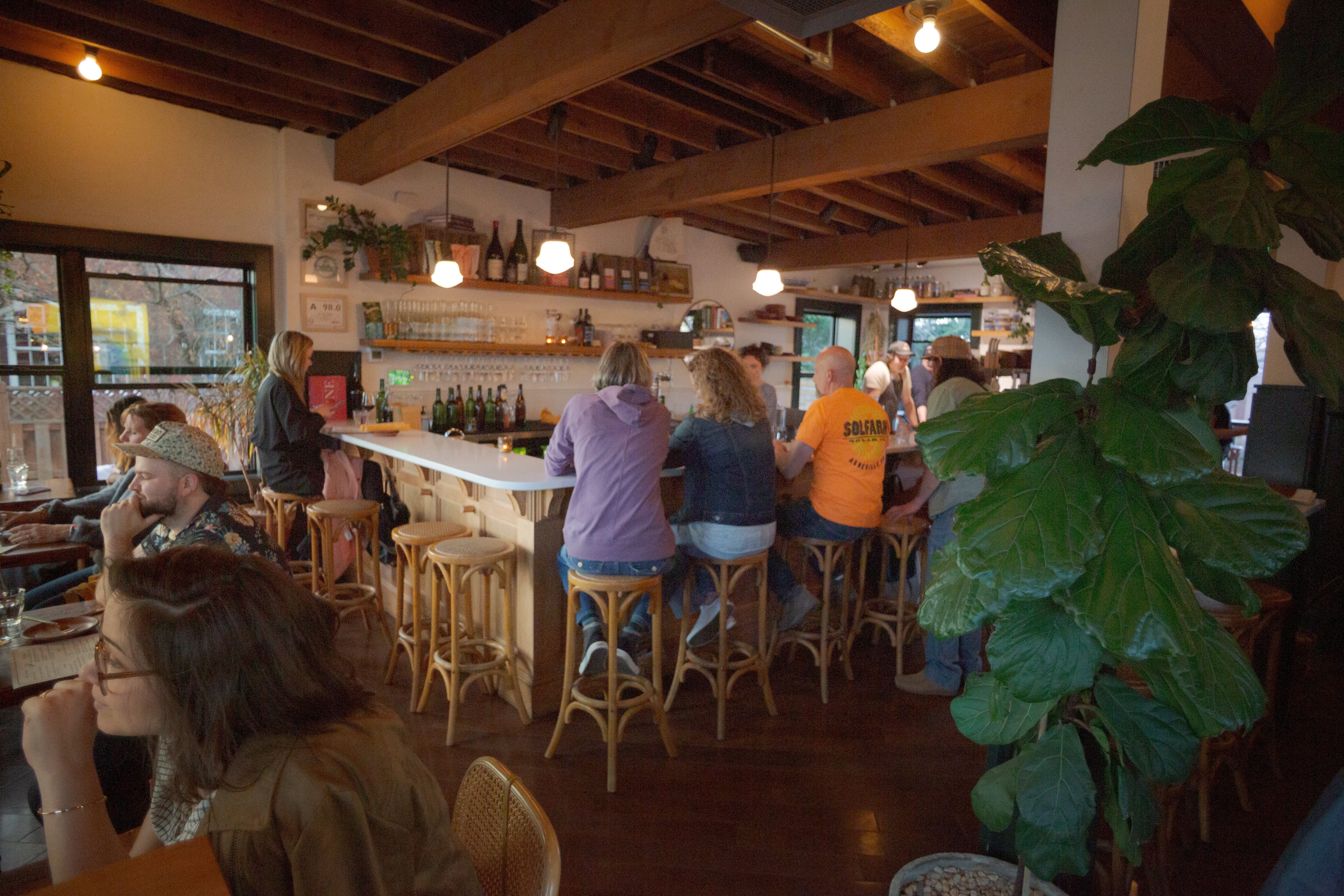
Nominated for a James Beard Award for its wine and beverage program, Leo’s House of Thirst is primarily a restaurant, and an excellent one. I dined with a colleague, and we shared several dishes: oysters with Meyer lemon mignonette and kimchi consummé; roasted carrots with farro, fromage blanc, basil pesto, pecans, and vadouvan brown butter; and Mezze Maniche pasta with short rib bolognese, winter squash, carrots, pecorino romano, breadcrumb, and cracked pepper, along with craft wine and beer. It was a clear, warm evening, so we sat outside on the spacious patio – a tough choice since the inside is equally atmospheric.
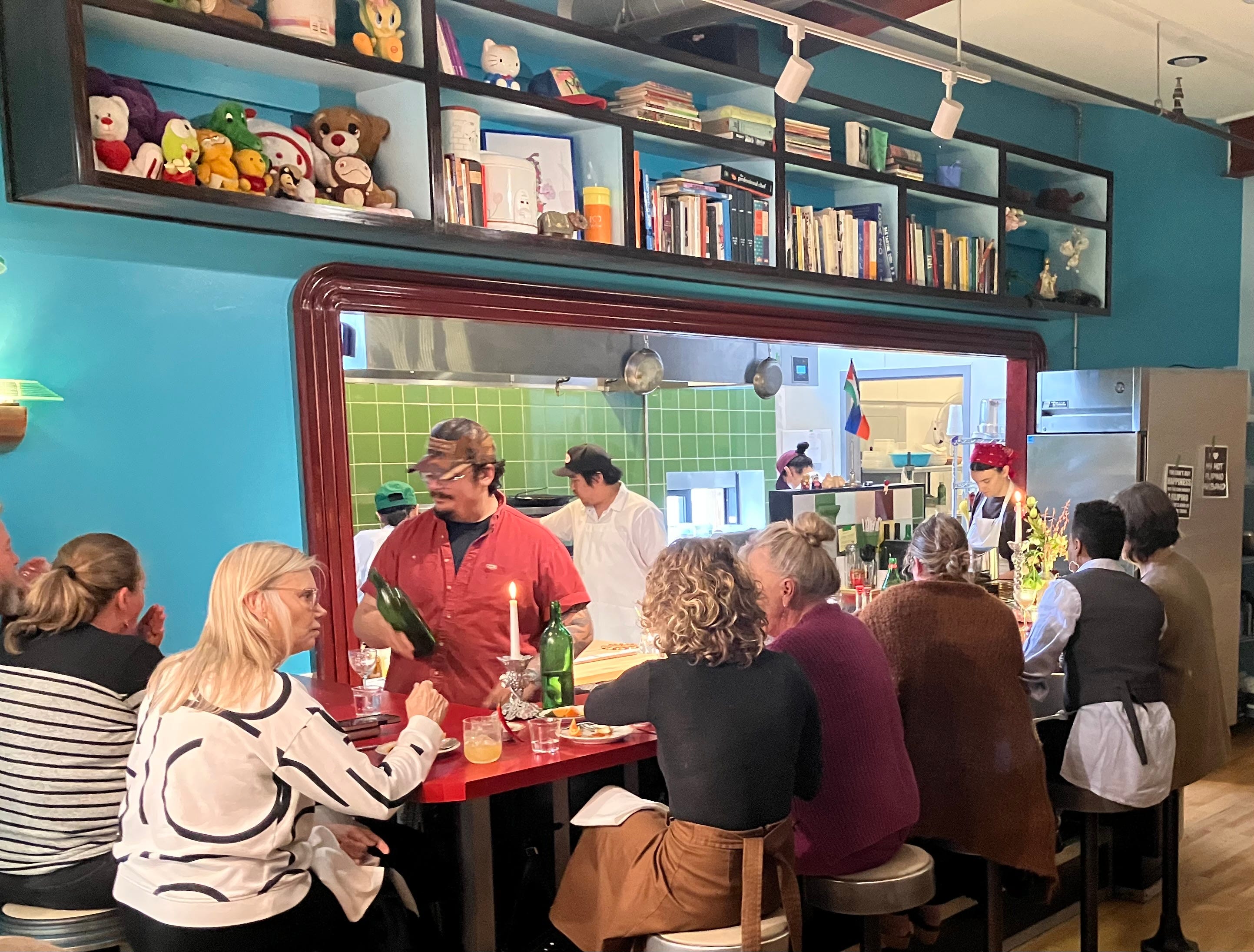
The following night, I dined at Neng Jr.’s, a colorful and small but spacious-feeling Filipino spot with high ceilings. There are only 18 seats – 12 at tables and six at the bar, the latter of which face the kitchen like a chef’s table. A 2023 James Beard Finalist for Best New Restaurant, I snagged a reservation thanks to a last-minute cancellation and splurged on a signature cocktail and three dishes – pork lumpia, tuna tartare with salad, and my favorite, the March Fruit, a surprisingly hearty plate of fresh cut pears, papayas, apples, and oranges, served with a delicious savory dipping sauce. The restaurant’s food and drinks are an intriguing balance of sweet, savory, and spicy.
Drink Up
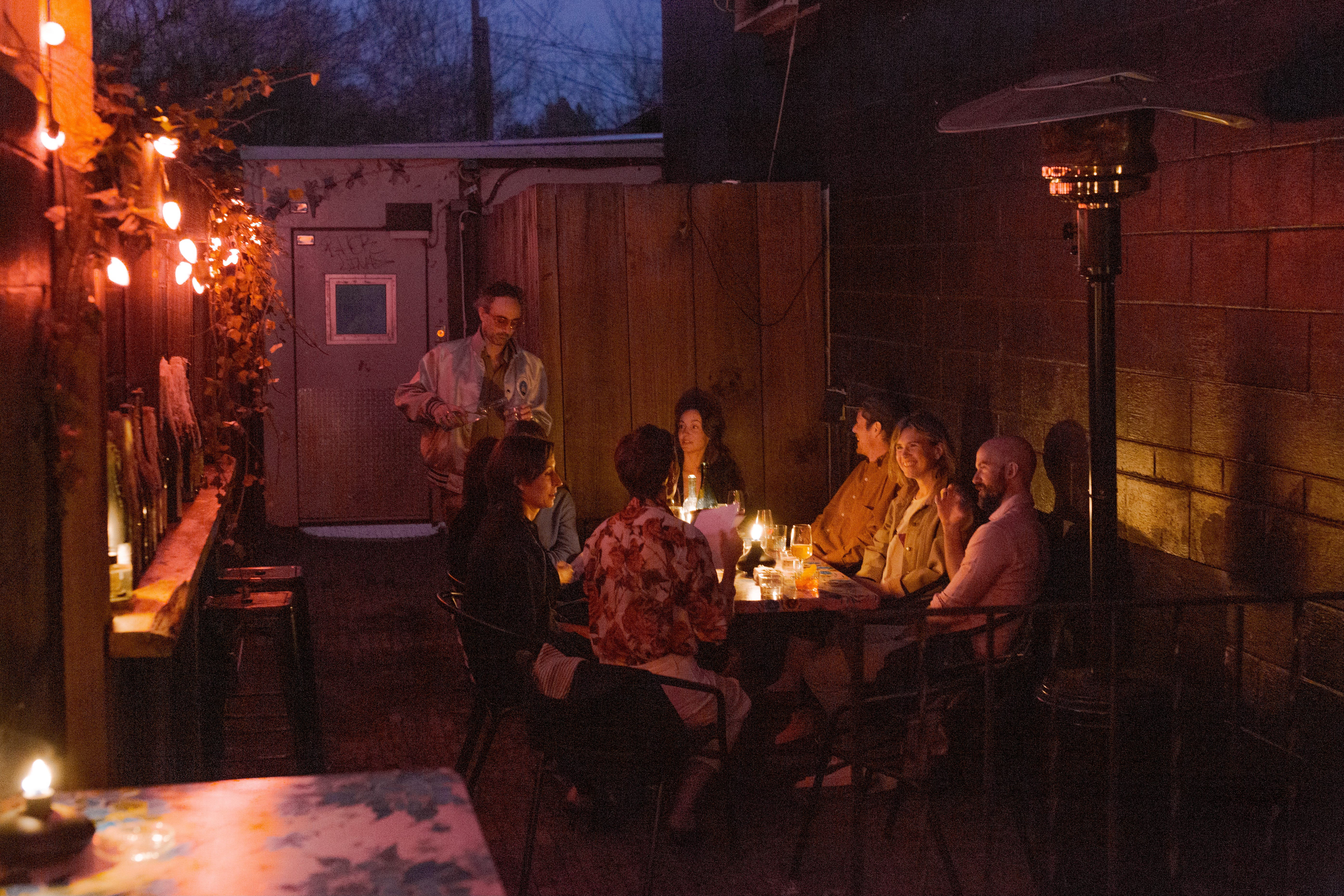
After my colleague and I dined at Leo’s, we headed up the street to Pink Moon, an outdoor wine bar speakeasy. The unpretentious and comfortable atmosphere, with wooden tables, red string lights, eclectic music, and allowance of smoking, reminds me of Spain. The door code (it is a speakeasy after all) is posted daily on its Instagram.
If you’re looking for something divey, just head to the bar in front of Pink Moon, The Double Crown, which hosts live bands almost nightly, or up the street to The Odd for karaoke. Downtown’s Jack of the Wood is a great place for traditional Irish sessions and bluegrass.
When it comes to coffee and café culture, three of my favorite places are Farewell in South Slope, Flora and Forage in West Asheville, and Rowan Coffee in downtown and now also West Asheville. Rowan has a beautiful, dark Victorian vibe, whereas Farewell and Flora and Forage make me feel like I’m outside in nature.
Farewell’s walls are mostly windows and the remaining are painted bright white, allowing sunlight to flood the space, punctuated by plants and an upbeat mural. This was my main hangout as an Asheville resident, and it serves exceptional coffee and local pastries.
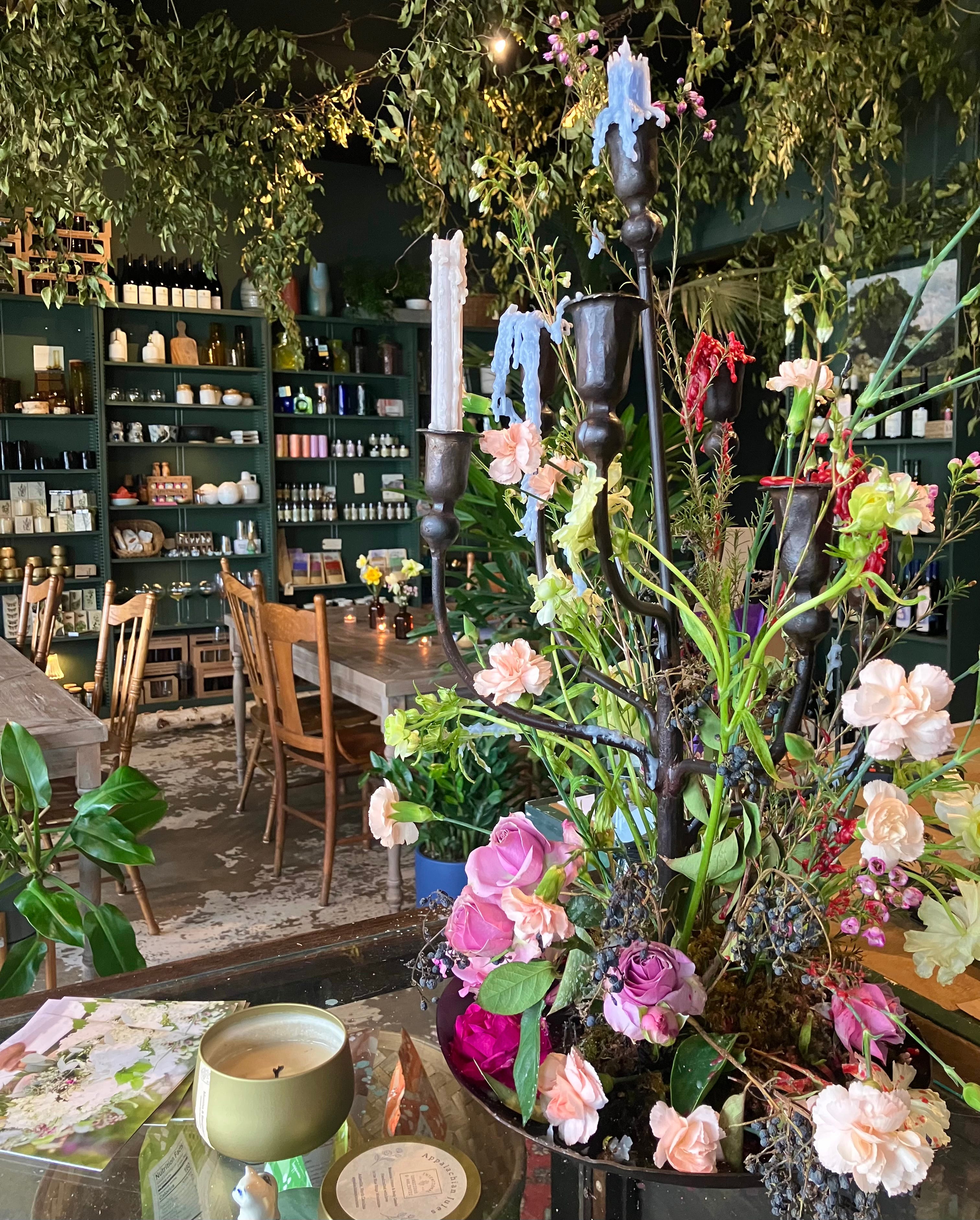
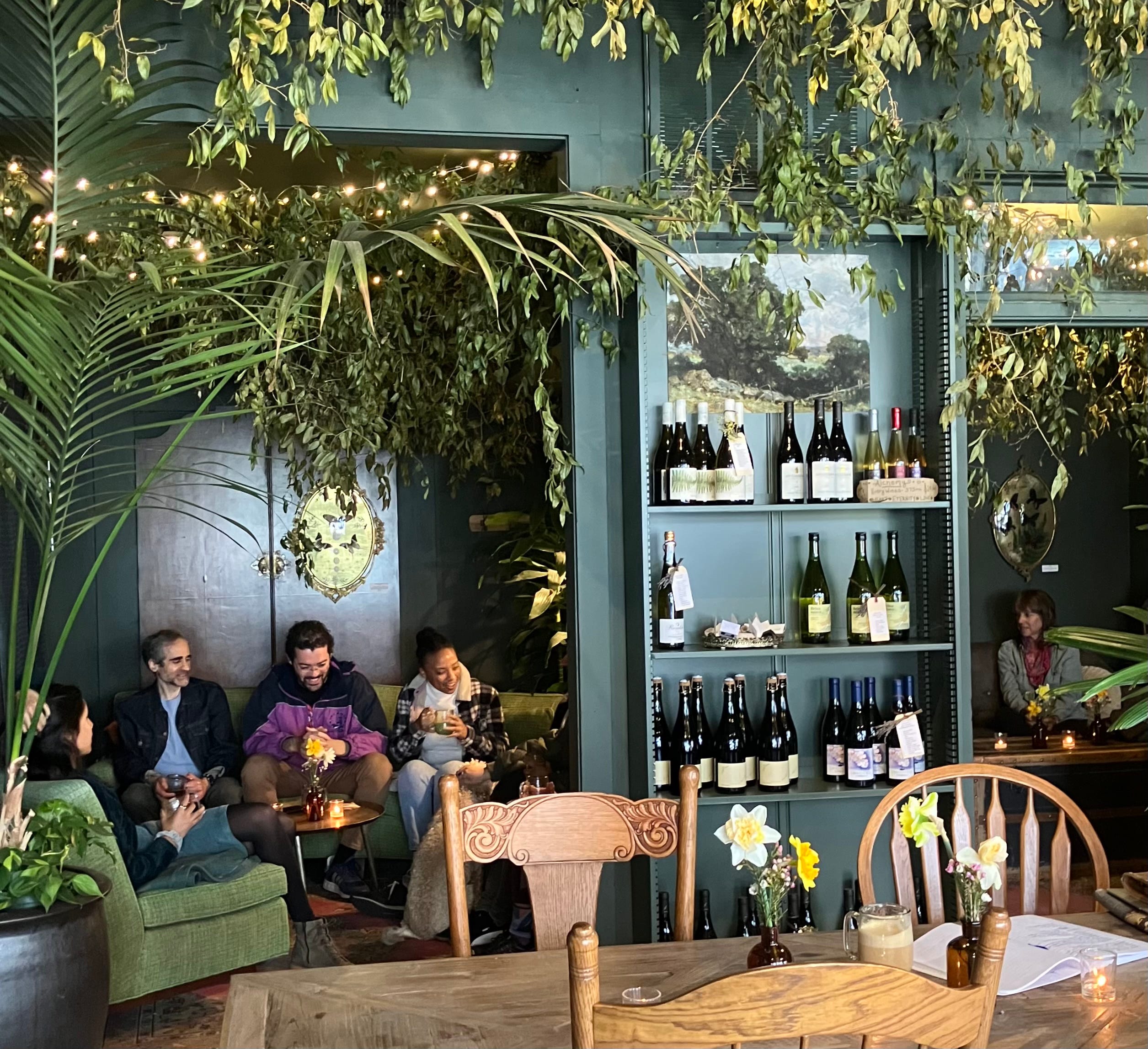
If Farewell feels like sunshine, Flora and Forage evokes a forest wonderland. It’s a botanical paradise full of plants and flowers, including vines hanging from the ceiling and rustic tables with vases full of flowers. Half of the space is a plant store, floral design studio, and gift shop (Flora), and the other half is a wine and coffee bar (Forage). The café houses two private nooks for groups.
Well Crafted
Asheville is a city of makers – makers of pottery, paintings, fashion, furniture, beer, food from local farms, you name it. Many of the businesses that suffered most in Hurricane Helene were these types of creative ventures, as riverfront properties are often older, less expensive, and more atmospheric than other locations. Hundreds of galleries, secondhand antique malls, and local factories housed in former industrial buildings near the French Broad River in the River Arts District (RAD) and along Swannanoa River Road in the Design District were completely wiped out.
Some fortunate spots that were physically unharmed in the storm have pivoted to carry more local goods in an effort to help their comrades. One of these places is There There in the RAD, located on higher ground along the aptly-named ‘Artful Way.’ The shop has increased its inventory of local artisans, alongside its already tastefully-curated home goods and clothing from designers around the U.S. I happened to visit when Asheville fashion designer Sapana Amin was ironing clothes for her upcoming pop-up event In Full Bloom to commemorate springtime. I was also delighted to meet Juno Pottery Owner Jennifer Seibert whose beautiful creations are also sold at the shop. I first admired her pottery at Farewell Coffee, which serves its lattes in charming Juno mugs.
The other shop I was eager to visit was the new location of Atomic Furnishing & Design on Broadway, an antique mall-type of space with different vendors, mostly specializing in mid-century modern furniture, design, home goods, and clothing. Other vendors carry rare vinyl records, plants, and local art, and there’s even a large non-alcoholic bottle shop in the back. The store’s original location along Swannanoa River Road was destroyed in the hurricane, and I was surprised at how quickly the owners reopened at this new location. It was one of many inspiring examples of hurricane trauma resilience.
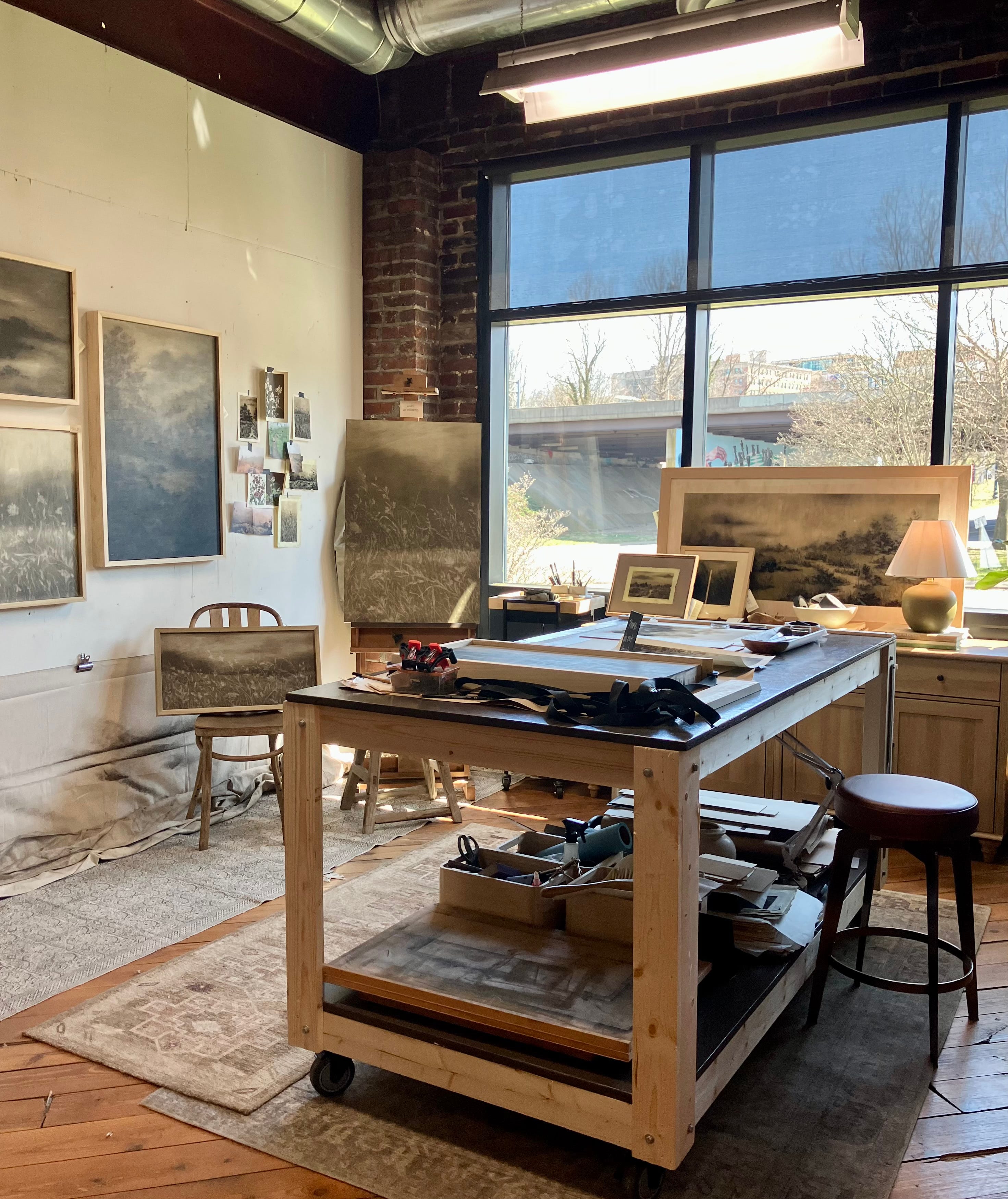
While admiring the charcoal artwork of Linsey Gray, a friendly fellow shopper informed me she also has a gallery down the street at the newly-opened Resurrection Studios Collective. It turns out the property owners of the former Moog building transformed the empty space into an artist collective to give local artists, most of whom lost their RAD studios in the hurricane, a place to work and sell their goods. The name of the collective is a nod to the creative community rising from the ashes.
As usual, I departed Asheville wishing I had more time to see and do more, including catch live music, enjoy more eateries, and peruse more galleries. I guess that’s a good thing, since every time I go back I get to experience new things.
I hope others will follow in my footsteps and travel to Asheville this spring. Visiting the city is an ethical win-win: we can have a blast enjoying the deep local culture of food, art, and nature, and we’re also helping keep Appalachian small businesses and artisans above water.
For additional Asheville business recommendations, please see my Winter 2024 article “Healing Arts” in Vessel magazine.
Makes me want to go back and stay forever!
Love this! Reminds me of the chilled oysters and cucumber mignonette recipe I adapted from hit NYC restaurant Via Carota for easy home cooking!
check it out:
https://thesecretingredient.substack.com/p/get-via-carota-recipe-chilled-oysters-with-cucumber-mignonette